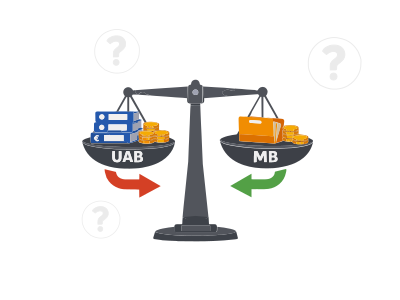
 To invest in financial instruments in Lithuania, individuals may open a securities or investment account with an authorised financial institution or investment service provider. The appropriate account and investment structure depend on the type of financial instruments, the investor’s country of tax residence and applicable regulatory requirements. Since 1 January 2025, Lithuanian tax residents may also use the investment account tax regime, which allows taxation of qualifying investment returns to be deferred until withdrawals exceed the amount of funds contributed, subject to statutory conditions.
Over the last year, investments focusing more on innovations, such as investments in ICT equipment (Information and Communication Technologies), including intellectual property products, have been particularly popular in Lithuania. In the first case, there was a growth of 24%, and in the second—an average of 6.6% per annum. Overall, each of these types of investments amounts to 10% of total investments; Investments in construction is still for the largest share, but its share has fallen from 70% to 50%. The growth rate has also been relatively stable, reaching 8% p.a. since 2017.
Invest safely—recognize risky investment proposals
If you have occasionally received an offer to invest extremely profitably and without any risk, first check whether the institution offering such investments has the necessary licenses and permits. All licensed financial market players that can operate in Lithuania are published on the website of the Bank of Lithuania.
What are these investment platforms, and how do they work?
In particular, it should be noted that in many foreign countries, activities of investment platforms are still not clearly and fully defined and monitored. Fortunately, the situation is just the opposite in Lithuania. At the end of 2016, a law on crowdfunding was adopted in Lithuania, which regulated and defined the activities of crowdfunding platform operators. Also, Lithuania has a law on consumer credit that establishes duties and responsibilities of peer-to-peer lending platform operators. Investment platforms operating in Lithuania are subject to regulatory requirements depending on their business model and the financial services they provide. Crowdfunding service providers within the scope of Regulation (EU) 2020/1503 must obtain the relevant authorisation and comply with EU crowdfunding rules. Consumer credit and peer-to-peer lending platforms are subject to applicable Lithuanian legislation, while investment firms and other financial service providers may require separate authorisation. However, not every online platform advertising investment opportunities is licensed or supervised by the Bank of Lithuania. Investors should verify the provider’s regulatory status, permitted activities and applicable investor protections before investing.
Main types of investment platforms
So, when looking for where to invest, you will need to discuss the main types of investment platforms. When assessing investment platforms operating in Lithuania and neighbouring countries, it can be noted that many of them try to specialise in a particular chosen sector. For example, various peer-to-peer lending platforms offer an opportunity to invest in consumer loans to people, while crowdfunding platforms allow you to invest in real estate development or other business financing projects.
Basically, all investment platforms in Lithuania and abroad operate in one of the following sectors:
- Financing of consumer loans
- Financing of real estate development
- Financing of business loans
You can invest in consumer loans on the following investment platforms: Loan Club, Twino, Mintos, FinBee, Lenndy, or Savy.
Financing of business loans
If there is an interest in investing in a business, you can do so on investment platforms that fund business loans. Business loans are usually applied to small companies looking for finances for new business projects, business development or simply in case of lack of money for working capital. There are also urgent cases when it is necessary to repair suddenly broken critical machinery or when the company had a great opportunity to purchase some necessary raw materials at a price much lower than the market one.
On investment platforms, you can invest in loans of various sizes from 1000 to 500,000 euros. For lower value loans, the personal guarantee of the business owner is usually sufficient, and loans of more value are sought to be secured with collateral. In terms of returns, investing in business loans can be considered an intermediate option between consumer loans and asset-backed loans.
You can finance business loans on the following investment platforms: HeavyFinance, Debitum Network, Flender, or Crowdestor.
Financing the development of real estate projects
Real estate investment is one of the most popular investment methods in Lithuania. But surely not every person can afford to buy some property and, for example, rent it.
You can invest in real estate on the following investment platforms: EstateGuru, Nord Street, Profitus, EvoEstate, or Rendity.
Why invest through investment platforms?
Various online investment platforms in Lithuania have started to develop quite recently and are rapidly gaining popularity among investors. This is no coincidence, as investing online on these platforms has quite a few advantages:
- Investing is easy. When investing on platforms, you don’t need to be an investment expert, have an interest in the financial markets every day or anything like that. Investment platforms require much less expertise than securities trading, so it’s great for newbie investors to get to know what investing is all about.
- It’s easy to allocate investments. Investment breakdown is one of the main and most effective means of reducing investment risks. The possibility of investing small amounts makes it very easy to divide even a small investment portfolio, thereby, reducing the risks.
- Buyback arrangements and investment guarantees. Some investment platforms or loan originators offer contractual buyback arrangements under which certain loans may be repurchased following a specified period of non-payment. However, such arrangements are not universal, do not necessarily constitute legally guaranteed repayment, and depend on the financial capacity and contractual obligations of the entity providing the buyback commitment. Investors may still lose part or all of their invested capital. Crowdfunding and peer-to-peer lending investments are generally not protected by deposit guarantee schemes, and the applicable investor protection depends on the regulatory status and nature of the investment.
- Potential investment returns. Returns offered by crowdfunding and peer-to-peer lending platforms vary significantly depending on the underlying loans, borrower creditworthiness, investment duration, collateral and platform-specific risks. Advertised interest rates or projected returns do not represent guaranteed or necessarily achievable investment performance. Actual returns may be reduced by borrower defaults, recovery costs, platform fees, taxation and losses of invested capital. Investors should assess historical net returns, default rates, recovery procedures and the financial condition of the relevant platform before making investment decisions.
Income declaration in 2022: what do investors need to know?
Investment income received by Lithuanian tax residents is subject to Personal Income Tax according to the type of income, the applicable tax regime and the tax year. From 2026, qualifying investment income may be taxed at 15%, while certain capital gains and other investment-related income may be subject to progressive rates of 20%, 25% or 32% when the relevant statutory thresholds are exceeded. Dividends are generally subject to a separate 15% tax rate. Different taxation rules apply to qualifying investments held through a declared investment account.
Under the ordinary taxation regime, Lithuanian tax residents may benefit from an annual EUR 500 exemption for qualifying gains from the transfer of financial instruments, subject to statutory conditions and exceptions. This exemption does not automatically apply to all investment income, including dividends, and is not available under the investment account tax regime. Generally, unrealised increases in the market value of financial instruments are not subject to Personal Income Tax. However, dividends, interest and other investment income may become taxable when received, depending on the applicable rules. Under the investment account regime introduced in 2025, qualifying investment returns may be reinvested without immediate taxation, with tax generally arising when withdrawals exceed the remaining contributed funds.
After starting to invest, residents must complete and submit the resident income tax return to the tax office every year in spring.
Will I have to pay personal income tax (GPM) if I sell stocks, bonds, fund units or other financial assets?
Lithuanian tax residents are generally taxed on the taxable gain from the sale of financial instruments rather than the total sale proceeds. From 2026, qualifying gains may be subject to a 15% Personal Income Tax rate up to the applicable annual threshold of 12 average national wages (EUR 27,745.80 in 2026), with progressive rates of 20%, 25% and 32% applying to relevant higher taxable income. Gains from qualifying shares held for at least five years may be taxed at a flat 15% rate regardless of their amount. An annual EUR 500 exemption may apply to qualifying financial instrument disposals under the ordinary taxation regime, subject to statutory conditions. Under the investment account regime, qualifying withdrawals exceeding the remaining contributed funds are taxed at 15% from 2026, irrespective of the amount, without the EUR 500 exemption.
For example, if in 2021 you sold financial assets for 3000 euros, which you had purchased earlier for 2000 euros, your earnings would amount to 1000 euros. After applying the non-taxable amount of €500, you will only have to pay the income tax from €500.
Must I pay the income tax if the investment makes a profit, but it is not distributed?
Unrealised increases in the market value of financial instruments are generally not subject to Lithuanian Personal Income Tax. However, taxable income may arise when financial instruments are sold, interest or dividends are received, or other taxable investment transactions occur. The EUR 500 exemption applies only to qualifying income under the ordinary taxation regime and is subject to statutory conditions. Since 2025, Lithuanian tax residents may alternatively use the investment account regime for eligible financial instruments, under which qualifying investment income is generally taxed when withdrawals exceed the remaining amount of contributed funds.
What are advantages for foreigners?
Lithuanian and foreign investors are guaranteed equal operating conditions in accordance with investment rights and other laws. The rights and lawful interests of investors are protected by the laws of the Republic of Lithuania.
The investor can manage, use and dispose of the object of investment in the Republic of Lithuania in accordance with the laws and other regulatory of the Republic of Lithuania.
The investor can convert the profit (income) belonging to him, having paid taxes as prescribed by the laws of the Republic of Lithuania, into foreign currency and/or transfer it abroad without restrictions.
Foreign investors may contribute capital to Lithuanian legal entities in accordance with the applicable corporate legislation and the requirements governing monetary and non-monetary contributions. Lithuania adopted the euro as its official currency on 1 January 2015. Share capital of Lithuanian companies is denominated in euros, and monetary contributions must comply with the applicable payment, banking and registration requirements. Where funds originate in another currency, conversion into euros may be necessary.
Investment disputes involving foreign investors may be resolved through Lithuanian courts, agreed commercial arbitration procedures or international investment dispute settlement mechanisms where an applicable treaty or other valid legal basis provides jurisdiction. Access to arbitration administered by the International Centre for Settlement of Investment Disputes (ICSID) is not automatic. It requires a qualifying investment dispute, applicable jurisdictional conditions and valid consent to arbitration. The availability of treaty-based investor-state arbitration also depends on the relevant international agreements and applicable EU law.
Payments and compensation owed to foreign investors are governed by the applicable Lithuanian legislation, contractual arrangements and relevant international investment agreements. Where statutory compensation or interest calculations require a reference rate, the applicable current benchmark must be used. LIBOR has been permanently discontinued and should not be presented as an active reference rate. Any currency conversion, interest calculation or compensation mechanism must follow the relevant legal provisions and applicable contractual terms. The amount of payment shall be recalculated according to the official euro to foreign currency exchange rate that is published by the European Central Bank on the day of evaluation, In cases when the euro to foreign currency reference ratio is not published by the European Central Bank—according to the euro to foreign currency reference ratio published by the Bank of Lithuania.
If you are interested in investing in Lithuanian companies or securities, please kontaktas an expert of the Company in Lithuania UAB and get detailed advice.