Partnerystės galimybė su Company in Lithuania UAB

It is of utmost importance to consider partnering with a legal entity in the chosen jurisdiction when you have a valuable client. Our expertise, dedication, and comprehensive solutions ensure that your client’s needs are not only met but exceeded. We bring a proven track record of delivering exceptional results, making us the ideal choice for a successful partnership that can enhance your client relationships and drive mutual success.
Our company frequently receives inquiries from various service providers, indicating their clients’ keen interest in commencing business operations in Lithuania. To ensure a mutually advantageous process for all parties — our company, the service providers, and the clients — it is imperative to establish a collaborative partnership in advance. By establishing a cooperation agreement in advance, we can define the responsibilities of each party, coordinate the business establishment process and ensure that the services are provided in accordance with applicable Lithuanian legislation. The completion of corporate registration, banking procedures and regulatory authorisations remains subject to the requirements and decisions of the competent authorities and financial institutions.
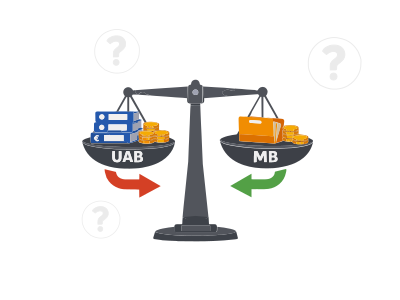
Our company is always eager to initiate partnerships based on mutual agreements and shared benefits. We are committed to facilitating successful collaborations. From our side, we can offer two distinct options to commence the process:
- Direct client referral. The partner refers the client directly to Company in Lithuania UAB, and we communicate with the client, assess their requirements and provide the agreed services. The referring partner may receive a referral commission under the terms of a written cooperation agreement, subject to applicable legal, professional conduct and conflict-of-interest requirements.
- White-label cooperation. The partner maintains the primary commercial relationship with the client, while Company in Lithuania UAB provides the agreed services as a subcontractor. The partner may establish its own client-facing service fees, subject to applicable transparency, professional conduct and contractual requirements. The parties must clearly allocate responsibility for client identification, AML/KYC compliance, personal data processing and service delivery in their cooperation agreement.
In both cases, our company is dedicated to ensuring a smooth and productive partnership by signing a cooperation agreement in advance.
Where the white-label cooperation model is selected, the parties should enter into a written cooperation agreement and, where appropriate, a separate Non-Disclosure Agreement (NDA). These agreements should establish the scope of services, confidentiality obligations, client relationship management, remuneration, allocation of responsibilities and applicable data protection requirements. Where personal data is processed on behalf of another party, a data processing agreement may also be required under Article 28 of the General Data Protection Regulation (GDPR). Within the business context, collaborative endeavours are commonly acknowledged as integral to the attainment of success.
Partnerships between companies, individuals, or organizations can be powerful catalysts for innovation, growth, and achieving common goals. However, as these collaborations grow more complex and encompass sensitive information, ensuring security and trust becomes paramount. This is where Non-Disclosure Agreements (NDAs) play a pivotal role.
NDAs are legally binding documents that define the terms and conditions under which confidential information is shared between parties. Their importance cannot be overstated when embarking on a collaborative venture. Here’s why they are essential:
- Protecting Sensitive Information: Collaborators often need to share proprietary data, trade secrets, and other sensitive An NDA establishes a legal framework to protect this information, ensuring it remains confidential and is not disclosed to unauthorized parties.
- Building Trust: NDAs create an environment of trust and assurance. They demonstrate a commitment to protecting each other’s interests and ideas, which is crucial for fostering a strong, mutually beneficial.
- Security in Communication: Secure communication is vital in any collaborative effort. NDAs set the expectation that sensitive discussions will remain confidential, encouraging partners to communicate openly without fear of information.
- Protecting Client Relationships: A cooperation agreement may include a clearly defined non-circumvention or non-solicitation clause to protect client relationships introduced by either party. Such provisions should specify their scope, duration and permitted activities and must comply with applicable Lithuanian contract law and EU competition law. An NDA primarily protects confidential information and does not automatically establish exclusivity or prevent either party from providing services to particular clients.
- Defining the Rules of Engagement: NDAs establish clear rules and guidelines for handling confidential information, thereby reducing the risk of misunderstandings, and this clarity ensures that both parties are on the same page and that there is a shared commitment to the partnership’s success.
- Achieving Common Goals: Collaborations often have specific goals and objectives. NDAs help partners remain focused on these goals by minimizing distractions related to the misuse or mishandling of sensitive.
These agreements create a foundation of trust, security, and exclusivity that is essential for achieving common goals. By safeguarding confidential information, encouraging open communication, and providing a clear roadmap for the partnership, NDAs play a crucial role in the success of collaborative endeavours. So, when embarking on a new partnership, remember that an NDA is not just a formality but a key tool for ensuring the prosperity and security of our shared ambitions.
Company in Lithuania UAB is consistently prepared and eager to initiate a partnership. Please submit your request and inform us of your questions.