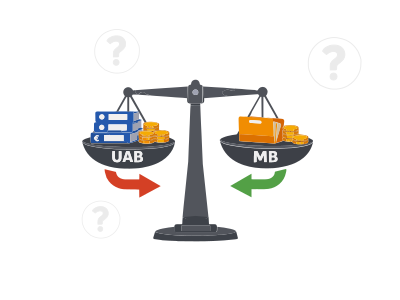
On 17 November 2022, the Seimas approved the long-awaited amendments to the Law on Joint-Stock Companies, which replace outdated provisions in the law of the Joint-Stock Company, which are no longer relevant and no longer meet the needs of the market, new rules, which will contribute to the creation of a more favourable business environment, attract foreign investment and create enterprises with added value in Lithuania. The amendments to Lithuania’s Law on Companies were adopted by the Seimas on 17 November 2022 as Law No. XIV-1540. Most provisions entered into force on 30 November 2022, while specified provisions, including the reduction of the minimum share capital for a UAB, entered into force on 1 May 2023.
Mandatory buyback or sale of shares of the company
In the legal practice of EU countries, the institution of share buybacks has long been known and applied. In Lithuania, similar provisions have already been applied to listing companies. According to the changes in the law of the Joint Stock Company, a shareholder acting independently or jointly with other persons acting in concert, acquiring at least 95% of the shares of a company providing the right to vote at the general meeting of shareholders (hereinafter – a majority shareholder)will have the right to require all other shareholders of this company to sell their shares (the right of redemption) and the last shareholder will be obliged to sell these shares to the majority shareholder. Conversely, the minority shareholder will have the right to demand that the majority shareholder buy out the shares of the company owned by the minority shareholder, and the majority shareholder will be obliged to repurchase those shares (the buyback obligation). These provisions will also apply to the redemption of convertible bonds that can be exchanged for the company’s voting shares.
The amendment to the AO Law will also establish a detailed order of who, when, what, and for how long must inform about the right / obligation of redemption etc. The buyback of shares will not be initiated at any time, but only within 3 months of the date, when the shareholder of a company acquires at least 95% of votes at the General Meeting of Shareholders. This term is a guarantee of the interests of the small shareholder when the majority shareholder is not allowed to manipulate time and wait for the decline in the value of the shares of the company. In addition, a shareholder who has not fulfilled the obligation to repurchase the shares and has not contested the price of the purchase of shares will be obliged to pay 10 per cent per annum of the amount by which the maturity has been missed.
Shareholders who already held the qualifying rights before 30 November 2022 were given a transitional one-year period from that date to initiate the compulsory share purchase procedure. That transitional period has expired.
A shareholding below 5% does not remove statutory shareholder rights. Minority shareholders retain the rights attached to their shares, including applicable voting, information and judicial protection rights, although certain additional rights require a specified minimum holding. In this way, the institution of the buyback of shares will help to protect the rights of minority shareholders, since the possibilities of leaving the company will be clearly regulated by law. On the other hand, this institution will also help the majority shareholder to eliminate «absent» shareholders, and also help to resolve long-standing or threatening conflicts between large and small shareholders.
Class liberalization
Before the amendments effective from 1 May 2023, preference shares could represent no more than one-third of the company’s share capital. This general restriction was removed; non-voting preference shares may represent no more than one-half of the share capital. This regulation is rather limited and does not meet the needs of the market, which is unfavorably perceived by investors and was often one of the most unattractive moments when investing in Lithuanian start-ups. After the entry into force of the amendments to the AB Law, the company will be able to issue not only the above classes of preferred shares, but also other preferred shares, varieties of classes whose property and non-property rights granted by them will be established in the charter of the company. Non-voting preference shares may represent no more than 50% of the company’s share capital. The limit is calculated by nominal value, rather than by the number of shares.
Until 2023, on April 28, the Government is to adopt amendments to the implementing legislation, which will change the provisions in the Register of Legal Entities and improve the information system of participants of legal entities in order to create suitable conditions for registration of preferred shares.
Decision on reduction of authorized capital of CJSC
At present, a minimum authorized capital of 1,000 euros is required for the formation of a closed joint-stock company (CJSC). This minimum capital requirement ensures that companies are not formed by someone who has no serious intention of doing business. Even if the company does not carry out any activities, it is obliged to submit financial statements to the Centre of Registers, the relevant forms to the tax office and other obligatory data to the Lithuanian constituent bodies. Failure to provide data will result in an administrative fine for executives or responsible persons. Therefore, the minimum authorized capital requirement is a filter that helps to protect the business environment from non-functioning companies in Lithuania and to reduce the administrative burden on institutions.
From 1 May 2023, the minimum share capital of a private limited liability company (UAB) was reduced from EUR 2,500 to EUR 1,000. It is quite possible that this requirement, as before, will help to avoid driving «dormant» companies, but at the same time it is the optimal amount to start.
Adjustment of the share payment procedure
Currently, the JSC Law stipulates that the issue price of a share may not be lower than its nominal value. Following the adoption of the amendment, the AO Act adds this provision that shares may be issued at different issue prices. This applies to the situation where in one investment round investors are attracted at different prices to issue shares.
Before the amendments, each subscriber’s initial cash contribution had to cover at least one-quarter of the nominal value of the subscribed shares plus the full share premium. Under the amended rules, this requirement continues to apply to an AB, while a UAB subscriber’s initial cash contribution must cover at least one-quarter of the nominal value of the subscribed shares. The amendment to the Law of the Joint-Stock Company distinguishes the procedure for payment of new shares of joint-stock and closed joint-stock companies, stating that the initial cash contribution of each person who signed the shares of a closed joint-stock company, must be at least 1/4 of the nominal value of all the shares it has signed. For newly subscribed UAB shares, payment of the remaining nominal value and share premium may be deferred within the payment period specified in the share subscription agreement. Full payment must be completed no later than 12 months from the date of that agreement.
Right of pre-emption not applicable
So far, the shareholder intending to sell the shares of the company had to offer these shares to another shareholder of the company in accordance with the procedure established by the law of JSC (or in the manner prescribed by the charter of the company). If the last shareholder refuses to buy, only then the selling shareholder acquires the right to sell the shares at a price not lower than that specified in his notice of intent to sell the shares to any third party.
Before the amendments, UAB shareholders generally had a statutory pre-emption right when another shareholder sold shares, although the articles of association could specify a different procedure. Since 30 November 2022, the articles may expressly provide that this pre-emption right does not apply. Following the entry into force of the amendment of the AB Law, it will be possible to provide in the Statute that the right of pre-emption in the case of the sale of shares of a private limited liability company shall not apply.
More flexible organization of shareholders’ meetings
The pandemic, investments, global business development and strong growth of technology tools in business relations have altered the hitherto tradition of physical meetings and have created a need for company management meetings remotely.
The company must enable electronic participation and voting at the general meeting when requested by shareholders holding at least 10% of all voting rights, or a lower threshold specified in its articles of association. After the entry into force of the amendments to the law of the Joint Stock Company, a shareholder or a group of shareholders whose shares give at least 10% of the total number of votes in a company (unless the charter provides for a smaller number of votes). The company shall have the right to require the company to form the right to participate in the shareholders meeting and to vote on it electronically, and the company shall be obliged to comply with this requirement.
In order to protect the interests of the shareholders of a minority company in the exercise of the rights of participation and voting at the Meeting of Shareholders it is also established that, with the approval of all shareholders, the charter of a company may provide, that participation and voting at the shareholders meeting shall be carried out only by electronic means. This rule does not prohibit shareholders to physically attend meetings on certain issues, if it is stipulated by the charter of a company. For example, it may be envisaged that the organization of a shareholders’ meeting only electronically is a standard way of organizing a shareholders’ meeting, but decisions on policy issues (e.g. reorganization, liquidation, etc.) are accepted only with the physical participation of shareholders.
It should be noted that at this time the minutes of the shareholders’ meeting should be drawn up and signed no later than 7 days from the date of the shareholders’ meeting. After the decisions of the shareholders are taken at a distance, the rule of the 7-day census protocol remains, but it is established that only a qualified electronic signature can be signed in electronic form.
It should be noted that when holding meetings of the shareholders at a distance the board of directors of a company, and in its absence, the head shall approve the description of the procedure of participation and voting at the general meeting of the shareholders by electronic means. Such a description should include a detailed discussion of the requirements for the identification of shareholders or their authorized persons and other persons involved, the requirements for ensuring the security of the transmitted information, as well as the necessary equipment, possible applications (Microsoft Teams, Google, Skype, Zoom, etc.) and other issues related to communication, registration, voting, secret voting, recording and/or protocol should be clearly specified, in cases of technical intervention, etc.
Company in Lithuania UAB is a team of qualified and experienced professionals who provide accounting and legal services to Lithuanian companies with foreign owners. We will ensure that your company complies with all requirements of the Lithuanian legislation and enjoys all available tax benefits where possible. In addition to tax advice, we offer assistance in establishing companies, apskaita and corporate legal services.