 Finding a crypto-friendly jurisdiction and mastering its legal framework will most likely set any financial innovator on the path to growth. If you are wondering where to anchor your crypto business, Lithuania’s fintech ecosystem is ranked among the world’s top countries, according to the Global Fintech Index.
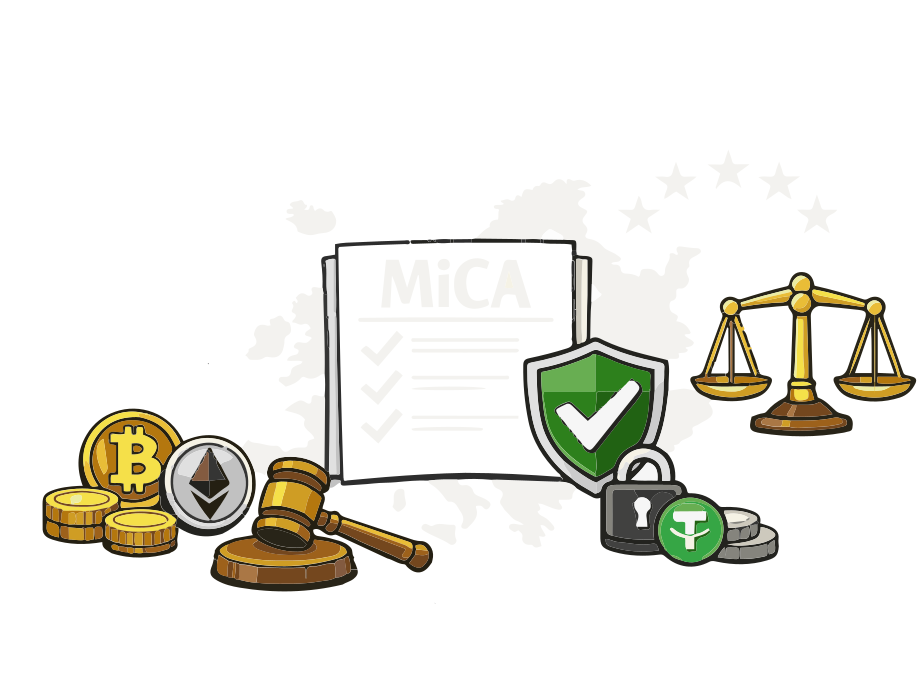
Since 30 December 2024, cryptocurrency regulation in Lithuania follows the EU Markets in Crypto-Assets Regulation (MiCA, Regulation (EU) 2023/1114) and the national Law on Crypto-Asset Markets adopted on 11 July 2024. Crypto-asset service providers (CASP) are licensed and supervised by the Lietuvos bankas. The former registration regime for virtual currency exchange and wallet operators under the supervision of the Financial Crime Investigation Service (FCIS) ended on 1 June 2025.
When operating in Lithuania, it is imperative to guarantee transparency: the information your crypto company publishes must be fair, clear and not misleading, and marketing communications must comply with MiCA, otherwise the regulator may apply sanctions.
One of the main advantages of the Lithuanian crypto ecosystem is that blockchain-based companies can connect with plenty of fintech companies offering innovative solutions for integrating fiat money and crypto-assets. The Bank of Lithuania also offers a pre-assessment of draft licence applications: feedback is received within five working days before the official submission.
Lithuania’s transitional regime for previously registered virtual currency operators ended on 31 December 2025. Crypto-asset services now require authorisation under MiCA, covering the specific services provided. Lithuanian CASP licences are issued by the Bank of Lithuania. CASPs authorised in another EU Member State may operate in Lithuania after completing the applicable cross-border notification procedure; qualifying financial institutions may use the notification route under Article 60 of MiCA.
A licence issued in Lithuania is valid in all EU/EEA countries (passporting). If Lithuania’s regulatory environment suits your crypto business vision, learn more about the MiCA licencija Lietuvoje process.
Key Application Requirements for a Lithuanian Crypto Licence
Applications for a CASP licence are submitted to the Bank of Lithuania, which also issues the licence. The Bank of Lithuania assesses application completeness within 25 working days and decides whether to grant authorisation within 40 working days after receiving a complete application. The assessment period may be suspended for up to 20 working days when additional information is requested under MiCA. Carefully prepared documentation is key, and our team at Company in Lithuania UAB can help you with it.
Here are the key things to take into consideration:
- To apply for a CASP licence, you first have to own, establish or buy a company with its registered office in Lithuania, usually a private limited liability company (UAB). The ordinary UAB minimum share capital of EUR 1,000 does not satisfy CASP prudential requirements. Under MiCA, prudential safeguards must equal at least the higher of the applicable service-based minimum of EUR 50,000, EUR 125,000 or EUR 150,000 and one quarter of annual fixed overheads. Custody and exchange services fall within the EUR 125,000 category. Safeguards may consist of qualifying own funds, qualifying insurance or a comparable guarantee, or a combination thereof.
- The owners and directors do not have to be residents of Lithuania, but at least one director must be resident in the EU. All members of the management body and the qualifying shareholders must be of good repute, which is why their background is checked.
- Client identification and transaction monitoring procedures are mandatory, and the collected data must be provided to the supervisory authorities on request. Since 30 December 2024, the travel rule applies to all transfers of crypto-assets.
- You will have to appoint an officer responsible for the prevention of money laundering and terrorist financing, who reports suspicious transactions to the Financial Crime Investigation Service (FCIS), and to put in place governance, risk management, ICT security and complaints-handling arrangements.
CASPs must demonstrate sufficient qualified personnel, effective governance and operational substance. Their place of effective management must be in the EU, and at least one director must reside in the EU. Staffing and outsourcing arrangements must satisfy the applicable regulatory requirements.
Taxation of Crypto Related Activities
Taxation of crypto-asset services is administered by the State Tax Inspectorate who considers the following activities taxable: mining, initial offering, buying, selling, mediation, settlement in such currencies for purchased or sold goods or services. Depending on the type of coins/tokens and specifics of crypto activities, your business might be subject to paying the following taxes:
- For tax periods beginning in 2026, the standard Lithuanian corporate income tax rate is 17% and applies to taxable profit generated by crypto-asset service providers, although some allowances might be available for software related R&D projects.
- Value Added Tax (VAT) is usually added to the sales of crypto related services (e.g. paid promotion of other platforms).
Examples of tax exemptions:
- Security tokens do not benefit from a general corporate income tax exemption. Tax treatment depends on the rights represented by the token and the substance of the transaction; income and gains are taxable unless a specific statutory exemption applies.
- Exchange services involving cryptocurrencies used as contractual means of payment are generally VAT exempt. Transactions in tokens qualifying as securities may fall within the applicable financial services exemptions. These exemptions do not automatically extend to every token or related service.
All in all, when it comes to paying Corporate Income Tax, based on the content and economic meaning of the transactions, cryptocurrencies are recognised as short-term assets that can be used or held as a means of payment for goods and services. For VAT purposes, cryptocurrencies qualifying as contractual means of payment are treated differently from tokens representing securities or rights to goods and services. VAT treatment depends on the instrument’s characteristics and the transaction concerned.
While Lithuanian crypto environment is booming and boasts plenty of advantages, its regulatory system might require a professional explanation. If you’re looking for the most innovative personalised advice on the cryptocurrency licence in Lithuania, we’re here to help. Company in Lithuania UAB has created an all-in-one package “Company and Crypto Licence in Lithuania” which includes assistance in establishing or purchasing a Lithuanian company as well as help in applying for a CASP licence in Lithuania.
We pride ourselves in our commitment to entrepreneurial customer satisfaction and strong expertise in Lithuanian legislation. Contact us today to receive comprehensive guidance on how to successfully start a crypto business in one of the friendliest Fintech jurisdictions in the entire world.
Our team here at Company in Lithuania UAB is also dedicated to providing such services as financial accounting for cryptocurrency companies, renting either a physical or a virtual office in Lithuania, as well as to supporting recruitment of a local company director and an AML compliance officer.