Paskirtųjų asmenų paslaugos Lietuvoje

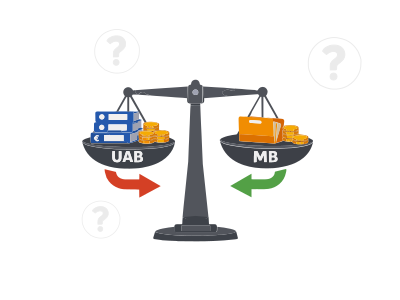
 Advokatai Company in Lithuania UAB would like to highlight the risks associated with the appointment of nominee board members and owners for the Lithuanian company.
A nominee director is a person formally appointed to a company’s management position who acts primarily on the instructions of another person. Under Lithuanian law, a company’s director remains legally responsible for fulfilling statutory management duties, regardless of any private nominee arrangement. A director cannot avoid legal responsibility by claiming that the company was actually managed by third parties. Arrangements involving undisclosed control, misleading corporate information or failure to comply with beneficial ownership reporting requirements may result in legal and regulatory consequences.
A Lithuanian private limited liability company (UAB) must have a single-person management body, the company director (vadovas), who manages day-to-day operations and represents the company within the scope of statutory and corporate authority. A UAB may also establish a collegial management board (valdyba), whose members exercise the powers assigned to the board under Lithuanian law and the company’s articles of association. A management board is not mandatory for every UAB. Authority to sign documents or operate company bank accounts depends on the applicable representation rules, registered powers and banking authorisations.
A beneficial owner of a Lithuanian company is a natural person who ultimately owns or controls the legal entity, directly or indirectly. Beneficial ownership generally includes individuals holding more than 25% of the shares, ownership interests or voting rights, as well as persons exercising effective control through other means. Where no beneficial owner can be identified after all reasonable measures have been taken, the relevant senior managing official or officials must be identified in accordance with Lithuanian anti-money laundering legislation. Beneficial ownership information must be reported through JANGIS, the beneficial ownership subsystem of JADIS, administered by the Lithuanian Centre of Registers.
Under Lithuanian law, the appointment of a UAB director depends on the company’s governance structure. Where a management board is established, the board generally appoints and removes the director. If no management board exists but a supervisory board has been formed, the supervisory board exercises this authority. Otherwise, the general meeting of shareholders appoints and removes the director. Members of the management board, where established, are generally elected by the supervisory board or, in its absence, by the general meeting of shareholders. Where a nominee shareholder is also appointed as the company’s director, the ultimate beneficial owner may face significant difficulties exercising control if the arrangement is not supported by legally enforceable agreements and appropriate corporate safeguards. Rights to appoint or remove directors generally belong to the company’s competent governing bodies and registered shareholders, rather than automatically to an undisclosed beneficial owner. Access to company bank accounts is governed by the bank’s authorisation procedures and the company’s representation arrangements. Nominee structures must not be used to conceal ultimate beneficial ownership or circumvent applicable AML/CTF requirements. The transfer of shares in a Lithuanian private limited liability company (UAB) does not always require a notarised agreement. Under the Lithuanian Civil Code, notarial certification is generally required where 25% or more of the company’s shares are sold or the transaction price exceeds EUR 14,500, subject to statutory exceptions, including certain transactions involving securities accounts maintained in accordance with Lithuanian law. Other share transfers may be completed through a written agreement, provided that the applicable corporate and legal requirements are satisfied. Changes in shareholder information must also be reported to JADIS within the prescribed statutory period.
Appointing a nominee shareholder or director may create substantial legal, operational and governance risks, particularly where the nominee holds registered ownership rights or exercises formal management authority. In the event of a dispute, the ultimate beneficial owner’s ability to regain control depends on the corporate documents, contractual arrangements, applicable shareholder rights and available legal remedies. Properly documented nominee arrangements may provide contractual protections, but they do not eliminate the risk of disputes, unauthorised transactions or loss of effective control.
Businesses should exercise caution when engaging providers of nominee shareholder or director services. Nominee arrangements are not automatically prohibited under Lithuanian law, but they must comply with corporate governance, beneficial ownership disclosure, anti-money laundering and other applicable legal requirements. Using nominees to conceal the identity of the ultimate beneficial owner, provide false information to public authorities or financial institutions, or facilitate unlawful activities may result in administrative, civil or criminal liability. Any nominee arrangement should be supported by appropriate legal documentation, transparent ownership reporting and effective corporate governance safeguards.
When you become a client of Company in Lithuania UAB, you can receive all the necessary services in one place: setting up a company, apskaitos paslaugos and advice, assistance in obtaining the necessary licenses and permits, legal support for your Lithuanian company, advice on opening a bank account.